
Flag Bases
Ground Spike Flag Bases for Feather & Teardrop Flags
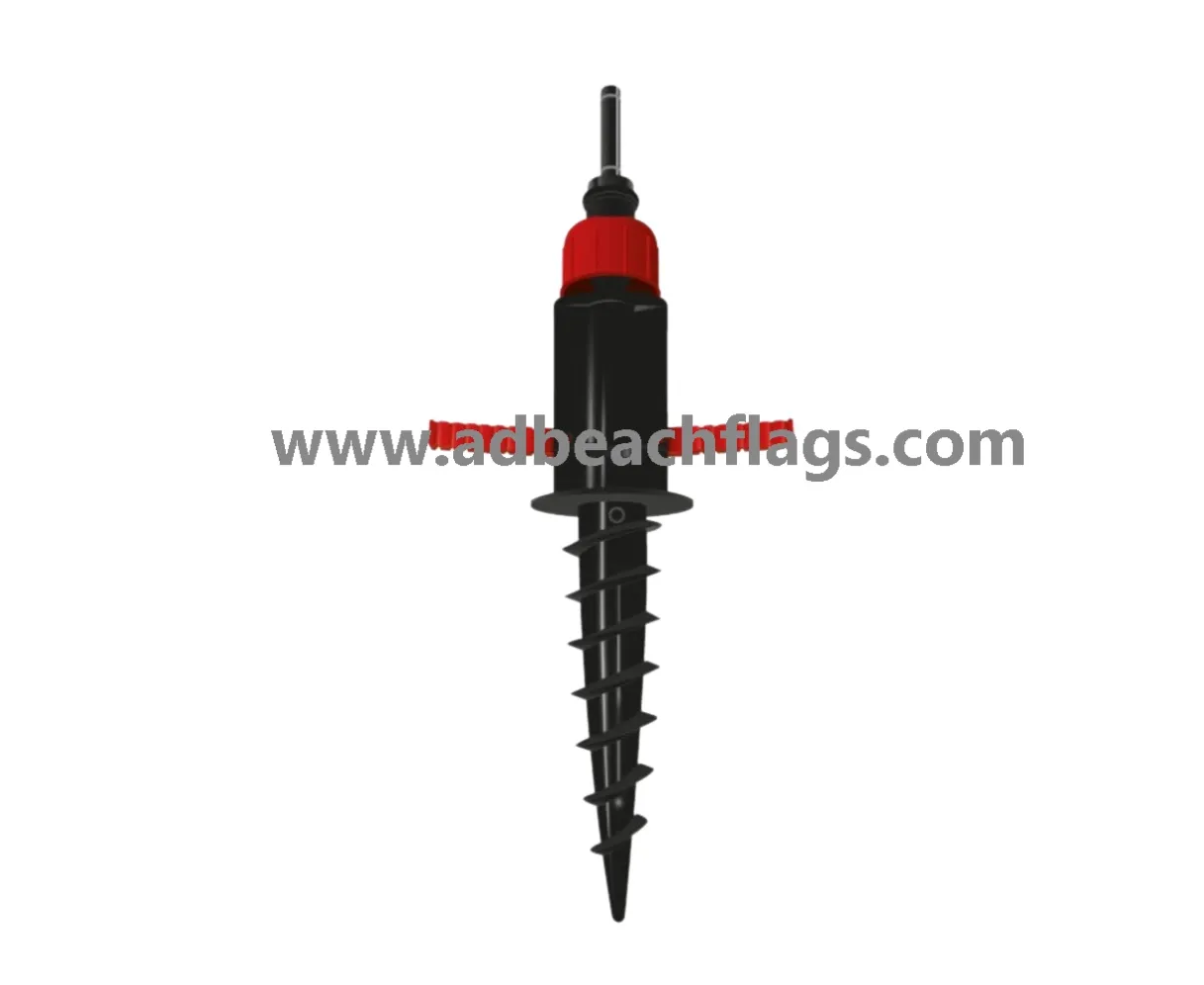
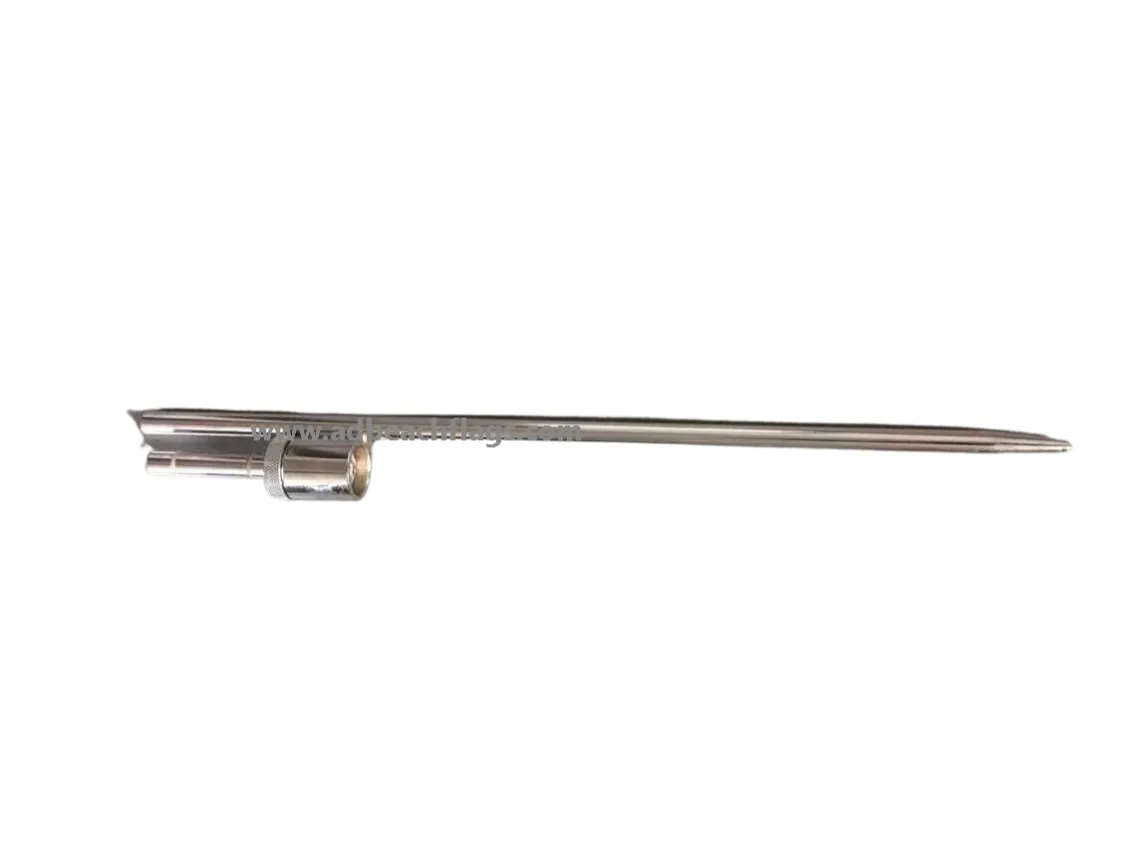
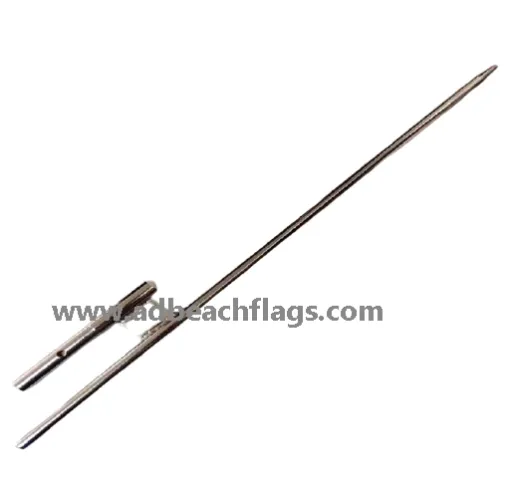
Three ground spike models compared: spiral screw-in, twin spike and steel spike. For firm grass and compacted soil. Socket, depth and packed length confirmed per model.
Specifications
Product category
Ground spike flag bases for penetrable ground
Models in this page
Spiral screw-in, twin spike with foot plate, steel spike
Holding method
Screw-in: helical body twisted in. Twin spike: two prongs driven with a foot plate. Steel spike: single driven shaft
Suited ground
Firm grass, turf and compacted soil with cohesion; the spiral also suits soft soil that holds a thread
Not suited to
Rock, paving, concrete, compacted gravel and indoor floors
Spindle
Fixed or ball-bearing rotating, confirmed per model
Reference length
Steel spike about 90 cm, with a compact 60 cm option; other models confirmed per model
Reference weight
About 2.5 kg for the 90 cm steel spike; other models confirmed per model
Compatible poles
Telescopic feather flag poles from about 1.8 m to 6 m for the steel spike; confirmed per model for the others
Packing
One piece per bag; carton quantity confirmed per model
MOQ and lead time
Confirmed against model, quantity and destination
A ground spike base is the simplest way to stand a flag on ground you can penetrate: grass verges, turf strips, compacted soil. No ballast, no plate, nothing to fill. You drive it in, fit the pole, and the ground does the holding.
Three models cover that job and they are not interchangeable. The comparison below is on the things that actually differ: how the base enters the ground, what it does under load, and what it leaves behind when it comes out.
What Is a Ground Spike Base?
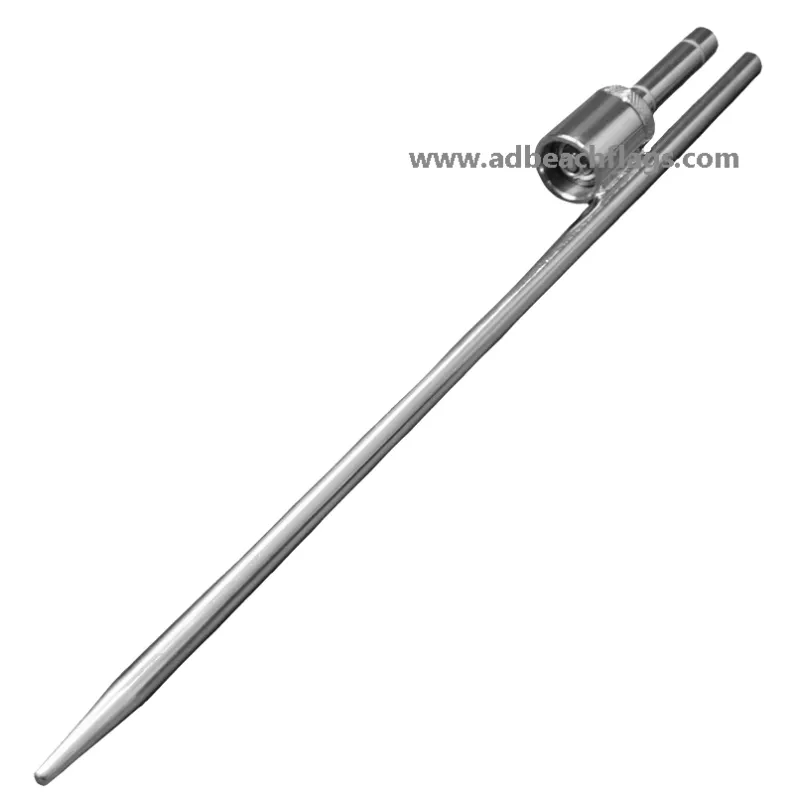
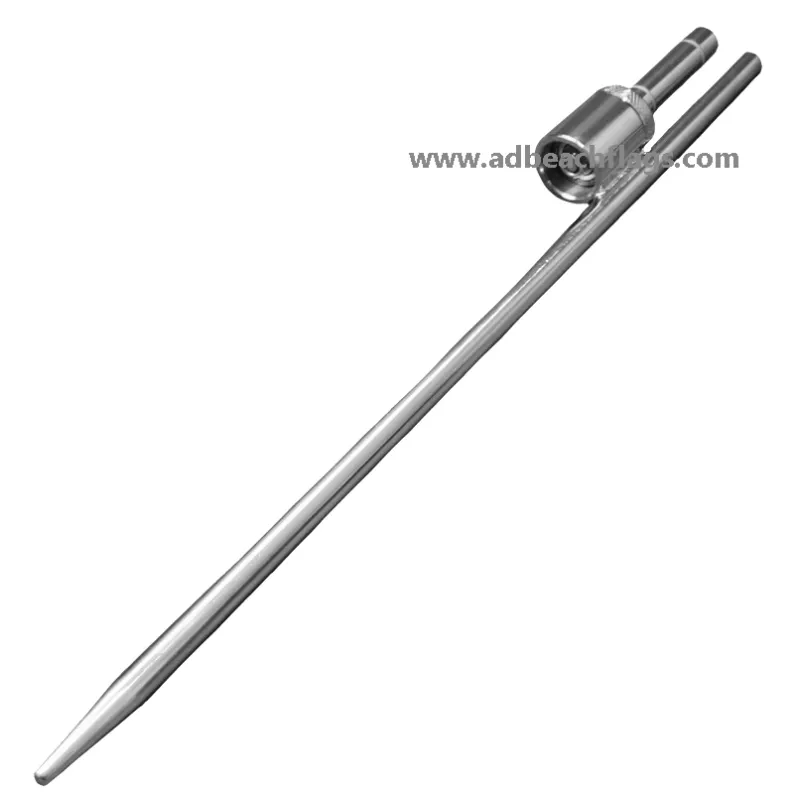
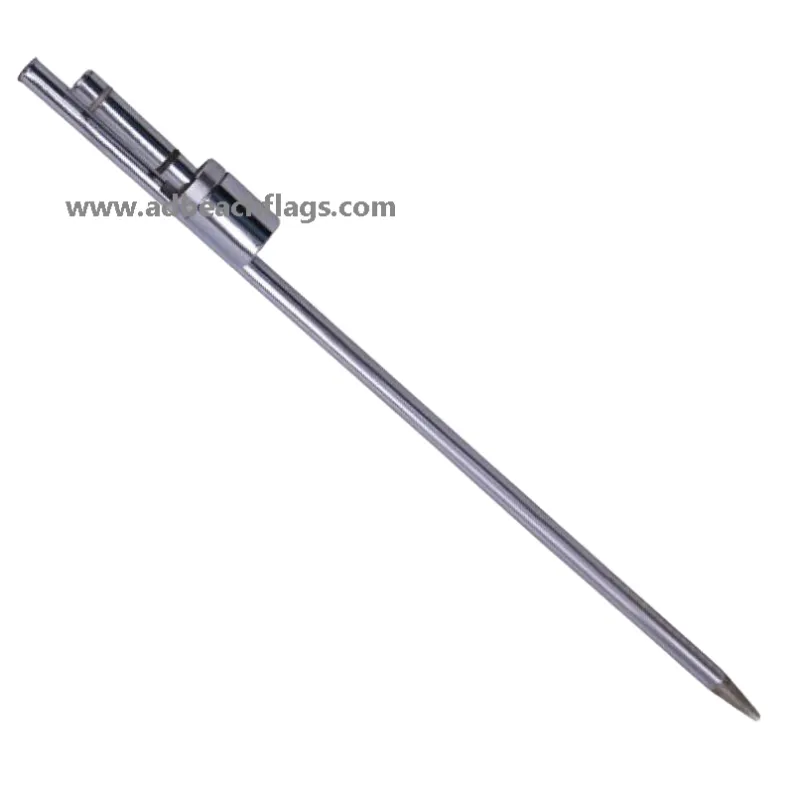
A pole socket fixed to a shaft that goes into the ground. The shaft is a spiral twisted in by hand, two prongs driven down with a foot plate, or a steel spike driven with a mallet. All three end in the same place: a socket standing above the surface, holding the pole upright with no weighted base on the ground.
What it is not
It is not a hard-ground base. On paving, concrete, compacted gravel or an indoor floor there is nothing to drive into, and forcing it damages the surface and leaves the base loose in the hole. Cross bases and metal plates exist for those floors.
What It Solves
A site with no room for a base footprint
A spike leaves nothing lying on the ground, so it fits a verge, a narrow strip between a path and a road, or a site where a plate would be a trip hazard.
A flag that has to come out and go back in
The screw-in and twin spike models are removed and reused without leaving a hole that has to be filled. That is why rental fleets and event companies specify them.
Weight nobody has to carry
A water base is heavy once filled and has to be emptied before it moves. A spike weighs a few kilos and one person carries it.
Compare the Three Models
The specification rows above are the comparison. These notes explain what each row decides.
Entering the ground
The spiral is twisted in and works back out, so it suits soil that holds a thread. The twin spike is driven and spreads load through two prongs and a foot plate, which is what lets it carry a larger flag. The steel spike is a single driven shaft: fastest to set, and the one that needs the firmest ground.
What holds the pole
All three end in a socket, and the socket rather than the shaft decides whether your pole fits. Confirm the socket diameter against the lower pole section, and whether the spindle is fixed or rotating. A rotating spindle lets the flag swing to shed wind; a fixed one holds direction.
Load and flag size
A single spiral suits a smaller sail area. Two prongs and a foot plate take more. The steel spike is quoted for telescopic poles from about 1.8 m to 6 m, but that is a pole range, not a wind rating: flag area, exposure and ground decide what stays up.
What it leaves behind
A screw hole that closes, two prong holes that need a boot on them, or one driven hole. On a turf strip the venue will have an opinion, so ask the groundskeeper which of the three is acceptable before ordering.
Weight and packed length
The 90 cm steel spike is about 2.5 kg, one piece per bag. The other two are quoted by model. Packed length decides the vehicle, so confirm it rather than assuming.
Features, Advantages and Buyer Benefits
No ballast to fill, carry or empty
Nothing to fill on site and nothing to drain before the vehicle leaves.
Socket matched to the pole
Fixed or rotating spindles are specified per model, so the pole is not an afterthought.
Removable and reusable
The base comes out and goes back in at the next site, which is what a rental fleet needs.
Low visual footprint
The ground stays visible around the pole, which matters on heritage frontages and narrow verges.
Three ground types, three behaviours
Threaded, driven or double-pronged, so the site decides the model rather than the price list.
Configuration Details to Confirm
Socket diameter and spindle type
Measure the lower pole section, not the pole's nominal size. State whether the flag should hold a direction or swing with the wind.
Insertion depth and shaft length
Depth is what the ground actually grips. It differs from overall length, and both should be stated per model.
Ground condition, wet and dry
Ground that holds a spike in July may not hold it after a week of rain. Tell us what the site is like when it is wet.
Flag size and exposure
Sail area and site exposure decide the model more than the flag's label does. A large flag on a single spiral is the wrong order.
Packed length and carton quantity
Both affect the carton and the freight. Ask for the packed size of the model you are buying, not the range.
Where It Works
Grass verges and park frontages. Roadside grass margins. Sports ground perimeter. Festival and event turf. Rental fleets serving any of those.
Where it does not work: paving, concrete, compacted gravel, indoor floors, and any site where the venue forbids stakes. Ask about that rule before the quotation, not on the morning of the event.
Bulk Supply, Customization and MOQ
Give the mix by model as well as the total. A fleet order usually needs two of the three types, and the carton plan changes with the mix.
For OEM we can mark the bag, print the carton and pack to a distributor's layout. Spare sockets and grips are worth adding to the first order rather than the second.
MOQ, sample terms, production timing and delivery are confirmed against the model, the quantity and the destination.
Why Choose BESDA
Flags, poles and bases come from one place, so the socket is checked against the pole you are buying rather than quoted on its own.
We will tell you when a spike is the wrong answer. If the site is paved, the quote should be a cross base or a plate, and saying so costs us a sale but saves you a return.
Inspection covers socket dimensions, spindle action, shaft straightness, finish and the packed contents against the approved list.
Frequently Asked Questions
Can I use a ground spike on paving or concrete?
No. There is nothing to drive into, and forcing it damages the surface. Use a cross base or a metal plate on hard, level ground.
Which of the three models should I choose?
Soft ground that holds a thread takes the spiral. Firm grass carrying a larger flag takes the twin spike. Firm, compacted ground and fast setup take the steel spike.
Will the base fit my existing pole?
Only if the socket diameter matches the lower pole section. Send the pole model or a photo of its base end and we will confirm instead of guessing.
Fixed or rotating spindle?
Rotating lets the flag swing downwind and reduces load on the pole. Fixed holds the message in one direction. It is a model choice, so name it in the enquiry.
Does the base name guarantee wind performance?
No. A product name describes the component. Flag area, pole, base fit, anchoring and site exposure decide what the display does in wind, and conditions still decide when the flag comes down.
Can it be reused at another site?
Yes for the screw-in and twin spike models on suitable ground. Inspect the shaft and socket between sites and replace anything bent.
What surface will not hold a spike?
Loose sand, rock, paving, concrete and compacted gravel. Wet, soft soil is a separate check: the ground has to grip the shaft, not just accept it.
What information do you need to quote?
The flag size, the pole model, the ground, a photo of the site, the quantity and any venue rule about stakes or freestanding hardware.
Product Facts at a Glance
Brand: BESDA. Product range: ground spike flag bases in three models, spiral screw-in, twin spike with foot plate, and steel spike. All three are for penetrable ground only: firm grass, turf and compacted soil with cohesion. None is suitable for rock, paving, concrete, compacted gravel or indoor floors. Fixed or ball-bearing rotating spindles are available per model. The 90 cm steel spike is about 2.5 kg; socket diameters, insertion depth, packed length and carton quantity are confirmed per model.
What BESDA Confirms Before Production
The model, the socket diameter against your pole, the spindle type, the shaft length and insertion depth, the ground condition including how it behaves when wet, and the flag size and exposure.
Then the packed length, the carton quantity and the inspection points: socket dimensions, spindle action, shaft straightness and finish. Nothing is released until the socket is confirmed against the pole.
Request a Wholesale Quote
Tell us the flag size, the pole model, the ground the base will stand in, the quantity, the destination and the date it has to arrive. If you already own the poles, send the base end measurement.
Send the brief through the form on this page, by email at info@we-display.net or by WhatsApp on 86-13516610926, and the reply will confirm the model and socket to be quoted.
Buying guides for this product:
