News & Insights
Pagoda Tent vs Pop-Up Canopy
Compare pagoda high-peak tents and standard pop-up canopies by roof shape, frame, usable space, branding, accessories, transport and event application.
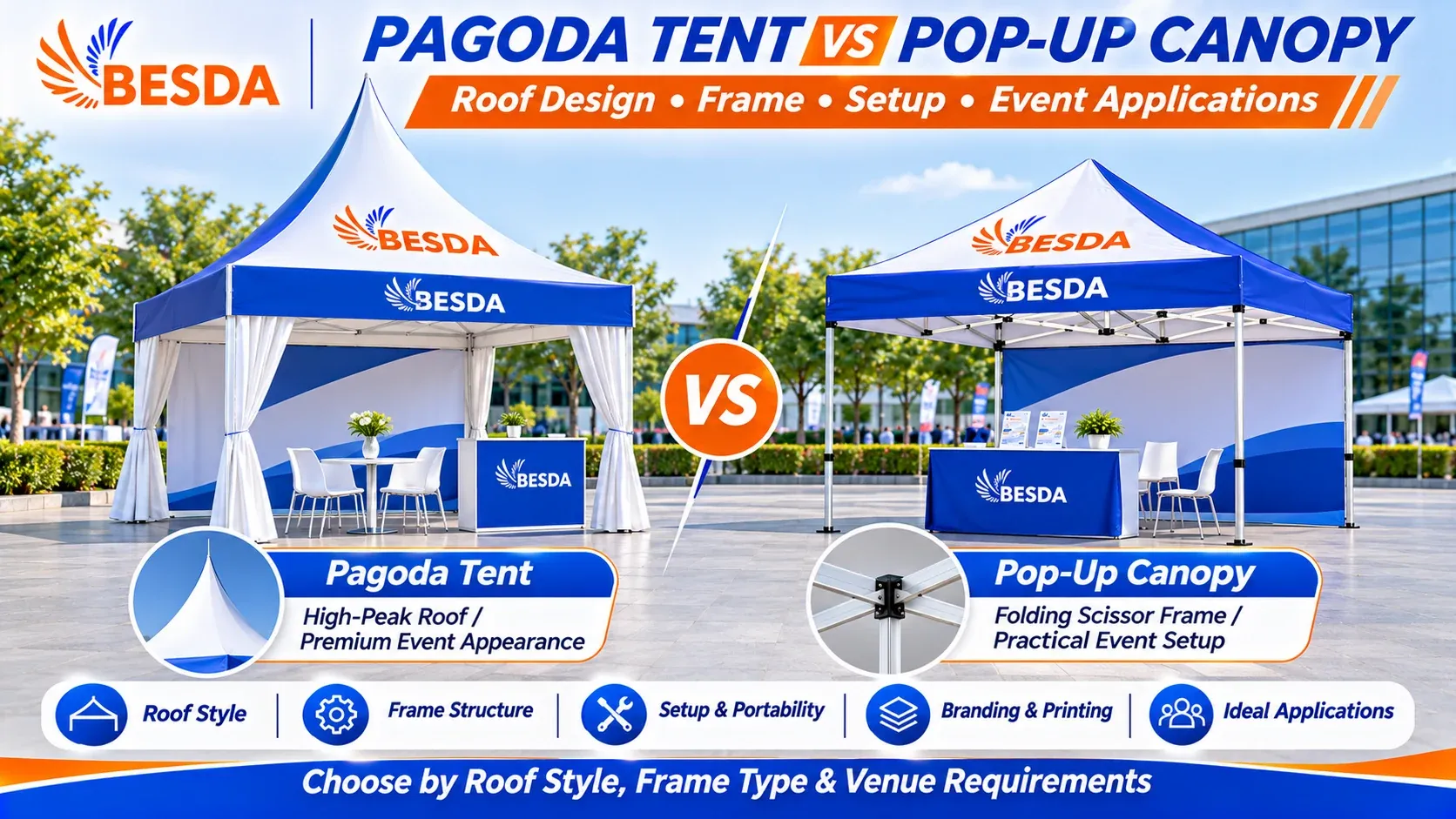
A pagoda tent is recognized by its raised central peak and sloping roof lines. A standard pop-up canopy usually has a simpler roof profile and folding scissor frame. The terms can overlap: some pagoda tents are themselves designed as pop-up folding structures. To choose correctly, separate roof shape from frame mechanism, then compare dimensions, accessories and the intended event.
What Is a Pagoda Tent?
A pagoda tent is a high-peak canopy style with a distinctive central roof point and sloping roof panels. The elevated profile can create a more formal or premium appearance for hospitality, exhibitions, retail activations and outdoor events. Pagoda tents are available in different structural systems. A high-peak roof does not automatically mean a heavy modular frame; some commercial designs use folding aluminum structures. Confirm the frame type and assembly method for the model being quoted.
What Is a Standard Pop-Up Canopy?
A standard pop-up canopy generally uses a folding scissor frame that expands to support a fabric roof. It is commonly used for markets, sampling, sports events, outdoor promotions and temporary shelter. Roof geometry, frame material, leg profile and canopy attachment vary by model. The phrase 'pop-up canopy' describes the deployment mechanism more than one fixed roof shape. Some high-peak pagoda designs also use a pop-up frame.
Roof Shape and Brand Presentation
The high peak of a pagoda roof creates a taller visual silhouette and can make a branded event area easier to recognize. A conventional canopy offers a familiar, practical roof line that may integrate easily with standard accessories and neighboring booths. Consider the venue's visual style, height restrictions, nearby structures, signage and whether the roof graphic will be visible from the approach direction.
Peak Height, Eave Height and Clearance
Do not compare tents by peak height alone. Ask for peak height, eave height, clear entrance height, leg height and the height of any valance or sidewall. These dimensions determine whether staff can move comfortably, whether equipment fits and whether the tent is allowed at the venue. A high peak can look impressive but does not necessarily provide more usable headroom across the whole footprint. Request a dimensioned side view and front view.
Frame Structure and Setup
Check frame material, tube dimensions, joint design, locking points, roof supports and whether tools are required. For a folding pagoda tent, ask how the high-peak geometry is created and how the frame locks. For a modular frame tent, confirm the number of components and crew requirements. Ask for a setup video of the exact size. Check whether roof fabric can remain attached during folding or must be removed, and whether sidewalls are installed before or after the frame is raised.
Sidewalls, Valances and Accessories
Both tent styles may offer sidewalls, half walls, window panels, mesh, doors, gutters, flags or printed valances, depending on the system. Accessory compatibility is not universal. Ask for a list of parts that fit the exact frame series and footprint. If several tents will be joined, check whether a rain gutter or connector is available and whether the combined arrangement is approved for the site.
Transport and Storage
Compare collapsed frame length, packed width, package count and gross weight. A high-peak tent can have a larger or differently shaped frame package than a standard canopy, but actual transport performance depends on the design and size. Request the complete packing list, including roof, walls, stakes, weights, carry bag and spare parts. Check vehicle access and warehouse storage before choosing a larger model.
Which One Is Right for Your Event?
Choose a pagoda roof when the high-peak appearance supports the brand or hospitality setting and the specific model meets the site's structural and logistical needs. Choose a conventional pop-up canopy when a familiar folding structure, standard footprint and accessory ecosystem fit the event workflow. Do not choose solely on appearance. Confirm site rules, anchoring, weather limitations, print layout, transport and setup responsibilities.
Pagoda and Pop-Up Tent RFQ Checklist
Provide footprint, roof style, peak and eave height, frame material, sidewall configuration, valance printing, accessories, setup crew, surface, anchoring plan, packed dimensions, quantity and destination. Request a drawing and model-specific installation instructions.
Comparison Table
Roof profile — Pagoda / high-peak roof: Distinctive raised central peak; Standard pop-up canopy: Usually simpler canopy roof profile.
Mechanism — Pagoda / high-peak roof: May be folding or modular; Standard pop-up canopy: Typically folding scissor frame.
Visual effect — Pagoda / high-peak roof: Tall, formal, recognizable silhouette; Standard pop-up canopy: Practical and familiar event shelter.
Clearance — Pagoda / high-peak roof: Check peak and eave separately; Standard pop-up canopy: Check peak and leg clearance.
Accessories — Pagoda / high-peak roof: Model-specific walls and connectors; Standard pop-up canopy: Broad options, still frame-series specific.
Frequently Asked Questions
Is every pagoda tent a pop-up tent?
No. Pagoda describes a roof style; pop-up describes a deployment mechanism. Some pagoda tents use folding pop-up frames.
Does a pagoda tent provide more usable space?
Not necessarily. Peak height and usable headroom are different. Review the dimensioned drawing and clear eave height.
Can I print a pagoda tent roof?
Many commercial models offer custom roof or valance printing. Confirm printable panels, seams, artwork template and fabric specification.
Can I connect two pagoda tents together?
Some systems offer gutters or connectors, but compatibility and site approval must be confirmed for the exact models.
Why Choose BESDA?
BESDA supports B2B projects across custom flags, event tents, portable trade show displays, counters and illuminated signage. We approach each enquiry by confirming the actual application, dimensions, materials, frame or hardware compatibility, artwork, packaging and destination requirements. Product specifications, test evidence and delivery details should be confirmed in the approved quotation and production documents. Send BESDA your preferred roof style, footprint, required peak and entrance height, sidewall plan, event location and quantity. We can help compare high-peak pagoda and standard folding canopy configurations.
Related BESDA resources
Deeper reading on this site: Outdoor Event Branding, Custom Tents, Factory Tour and Quality Control.
Next step
Send us your application, sizes, quantity, artwork status and destination, and we will reply with a specification-led quotation and a confirmed production schedule.
You can reach us on WhatsApp or by email, or use the form on the contact page for a recommendation within one working day.