News & Insights
Custom Event Tent for Windy & Rainy Weather
Choose a custom event tent by frame, fabric, roof, sidewalls, anchoring, weather exposure and transport. Learn what to confirm before a wholesale order.
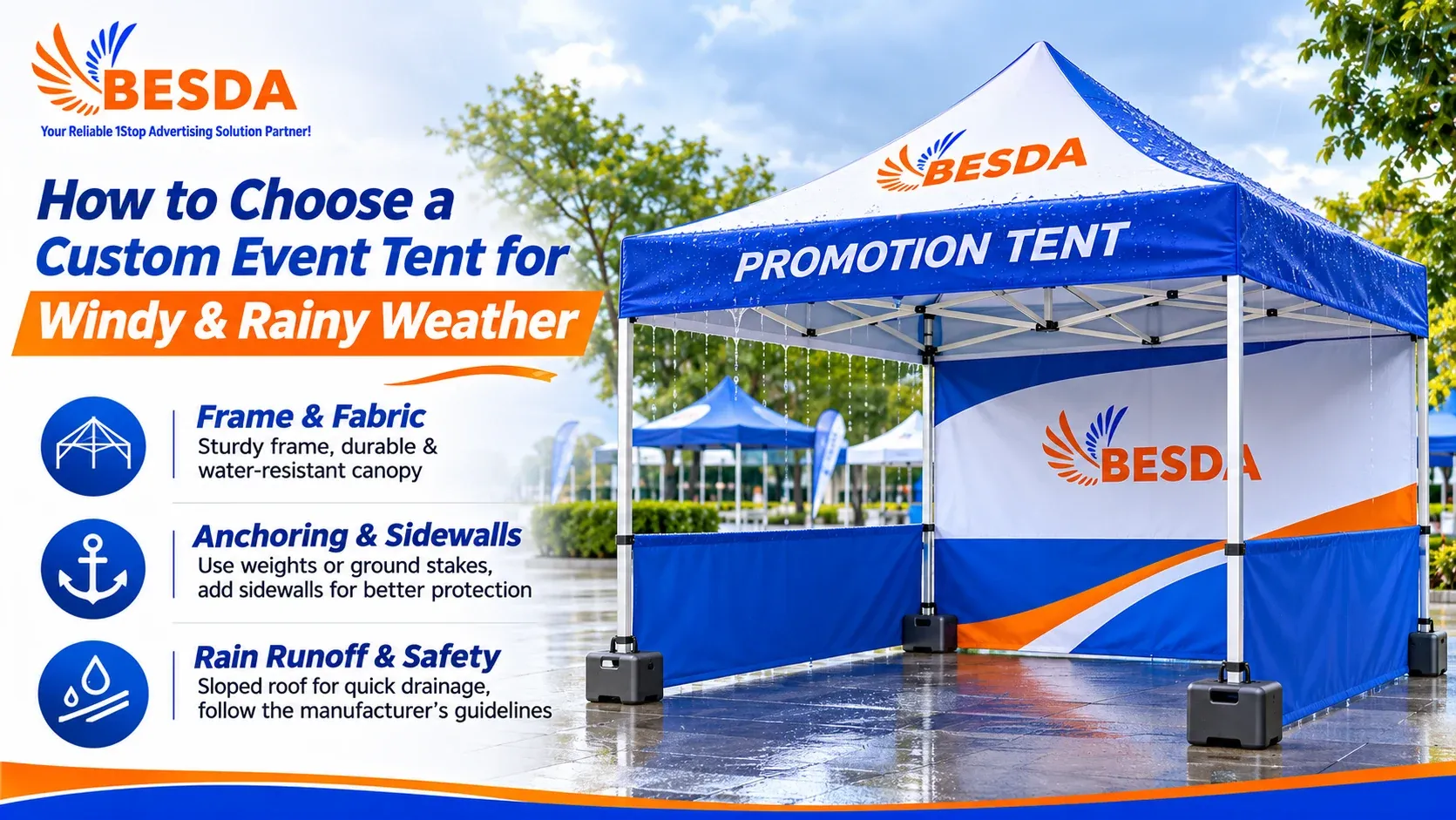
A custom event tent has to do more than carry a logo. It must fit the site, provide the required covered space, assemble reliably, accept the intended graphics and be secured according to the manufacturer's instructions and local conditions. A low price or a 'heavy-duty' label is not enough to judge performance. Start with the event, ground and weather exposure, then specify the complete tent system.
What Is a Custom Event Tent?
A custom event tent is a temporary shelter or branded structure configured with a frame, roof fabric, optional sidewalls, printed graphics, connectors, anchoring and transport accessories. Common promotional formats include pop-up canopies, pagoda tents, dome tents, star tents and inflatable structures. Their geometry, setup and anchoring requirements differ. Choose the structure by footprint, clear height, expected occupancy, branding area, setup crew, transport method and site restrictions—not only by appearance.
What Problems Does the Right Tent Solve?
A suitable tent provides shade or weather cover, creates a recognizable branded area, organizes event operations and gives staff a defined place to meet visitors. The wrong tent can be difficult to assemble, unstable in exposed conditions, too small for the intended use or expensive to transport. Buyers should also consider rain run-off, sidewall configuration, ventilation, access openings, cable routing, floor conditions and the effect of adding walls or banners that may increase wind exposure.
Frame Materials: Aluminum vs Steel
Aluminum frames are often selected where lower transport weight and corrosion resistance are priorities. Steel frames can provide a different balance of stiffness, weight and cost. Actual performance depends on alloy or steel grade, tube dimensions, wall thickness, joint design, finish, geometry and manufacturing quality. Do not compare frame materials by name alone. Request a dimensioned frame specification, tube profile, connector design, finish and packed weight. For repeated commercial use, check replacement legs, roof connectors and spare-part availability.
Roof Fabric, Coating and Printing
Fabric choice should reflect the event duration, expected weather, required appearance, print method, color, weight and cleaning or storage needs. Polyester fabrics with coatings and PVC-based materials have different hand-feel, weight, flexibility and care requirements. The exact material should be stated in the quotation. Ask whether the fabric is intended for the required use, how seams are constructed, how the roof attaches to the frame and whether the print is applied by panel or full-color process. If flame-retardant documentation is required, specify the exact standard and request the corresponding test evidence for the offered fabric. Do not assume all fabrics are certified.
Sidewalls, Half Walls and Branding Options
Sidewalls can add branding, privacy, wind protection or weather coverage, but they also change the tent's airflow and exposure. Choose open, half-wall, full-wall, window, door or printed panel configurations according to the operation. A fully enclosed setup may need different ventilation and anchoring considerations from an open canopy. Plan the graphic layout before production. Keep logos and text away from seams, corners, zippers and attachment points. Confirm which panels are printed, which are plain, and whether replacement walls can be ordered later.
Anchoring and Weather Safety
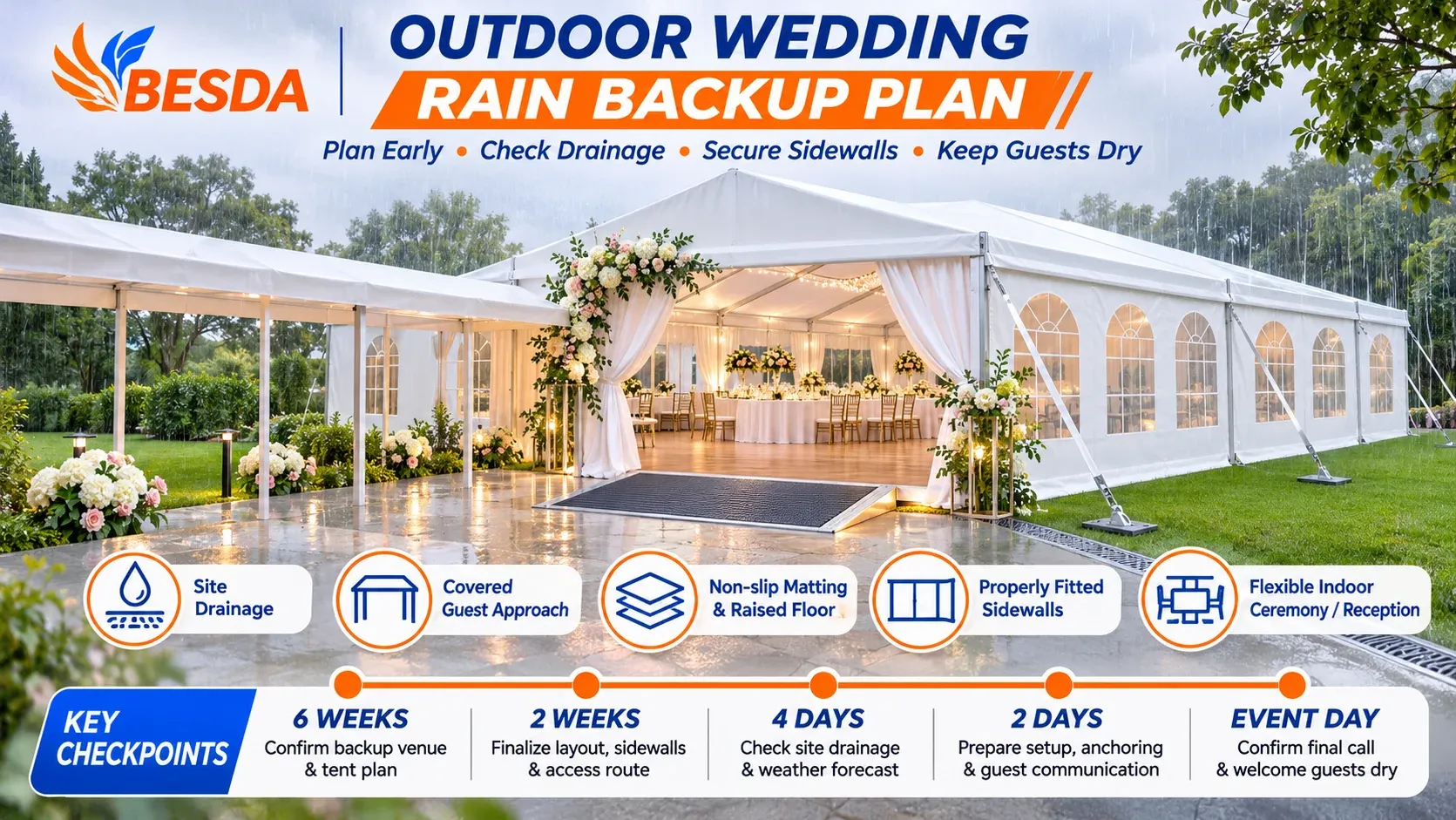
Anchoring must follow the tent manufacturer's instructions and the event site's rules. The method depends on the structure, size, surface, soil, exposure, ballast or stake system and local conditions. A stake that works in firm soil may not work in loose sand; a weight suitable for a small canopy may be inadequate for a larger or enclosed structure. Wind and rain can create serious loads. Sidewalls, banners and surrounding structures can change how wind acts on a tent. Stop using the tent and evacuate or dismantle it when conditions exceed the manufacturer's limits or when the event authority requires it. Do not use a generic weight-per-leg rule as a substitute for the model-specific anchoring plan.
Setup, Transport and Maintenance
Confirm the number of people required for setup, whether tools are needed, the packed length and weight, carry bag or wheeled case, spare parts and replacement roof or wall options. Conduct a test assembly before the event and check that all locks and connectors operate correctly. After use, allow the tent to dry completely before storage. Clean according to the material instructions, inspect seams and connectors, and keep the frame and fabric protected from sharp edges and prolonged damp storage.
What to Send for a Custom Tent Quotation
Provide footprint, clear height, tent style, frame preference, roof and wall configuration, print areas, indoor or outdoor use, ground surface, anchoring restrictions, event location, quantity, destination and required date. Include photos or a site plan if the installation area is unusual. Ask the supplier to confirm frame material and dimensions, fabric specification, print method, anchoring accessories, setup instructions, packed dimensions, replacement parts and any required test documents. The approved specification should identify exactly what will be produced.
Quick Comparison
Frame — Options to compare: Aluminum / steel / other approved structure; Buyer question: What are tube dimensions, joints and packed weight?.
Roof fabric — Options to compare: Polyester / coated textile / PVC-based material; Buyer question: What is the exact fabric and intended application?.
Walls — Options to compare: Open / half / full / window / door; Buyer question: How do walls affect access and wind exposure?.
Anchoring — Options to compare: Stakes / weights / approved ballast; Buyer question: What does the manufacturer specify for this site?.
Packing — Options to compare: Carry bag / wheel bag / carton / case; Buyer question: Can the team transport and store it safely?.
Frequently Asked Questions
Which event tent is best for windy weather?
There is no universal answer. Select a structure designed and documented for the intended exposure, then follow its anchoring and operating instructions. Site conditions, sidewalls and local rules matter.
Is an aluminum event tent stronger than a steel tent?
Material name alone does not determine strength. Compare tube dimensions, wall thickness, alloy or grade, joints, geometry, finish and the manufacturer's structural information.
Are all custom event tents waterproof?
No. Water resistance depends on the fabric, coating, seams, construction and product design. Ask for the exact material specification and intended weather-use information.
What should I check before ordering a printed event tent?
Confirm footprint, height, frame, fabric, print areas, walls, anchoring, setup, packing, destination, event date and any required fire or venue documentation.
Why Work With BESDA?
BESDA supplies custom flags, advertising tents, LED light boxes and portable trade show displays for B2B projects. The most useful supplier discussion starts with the real application, dimensions, artwork, hardware, installation environment, packing and delivery requirements. Product-specific specifications and compatibility should be confirmed in the approved quotation and production documents. Planning a branded tent for an outdoor event? Send BESDA your tent style, footprint, frame preference, roof and wall artwork, ground surface, event location, quantity and delivery date for a project-specific review.
Related BESDA resources
Deeper reading on this site: BESDA Homepage – Custom Flags, Tents & Displays, BESDA Factory Tour, BESDA Quality Control and BESDA FAQ.
Next step
Send us your application, sizes, quantity, artwork status and destination, and we will reply with a specification-led quotation and a confirmed production schedule.
You can reach us on WhatsApp or by email, or use the form on the contact page for a recommendation within one working day.