News & Insights
Dye Sublimation vs Screen Printing for Custom Tents
Compare tent printing methods by color range, artwork complexity, fabric compatibility, production setup, print feel, repeatability and buyer use case.
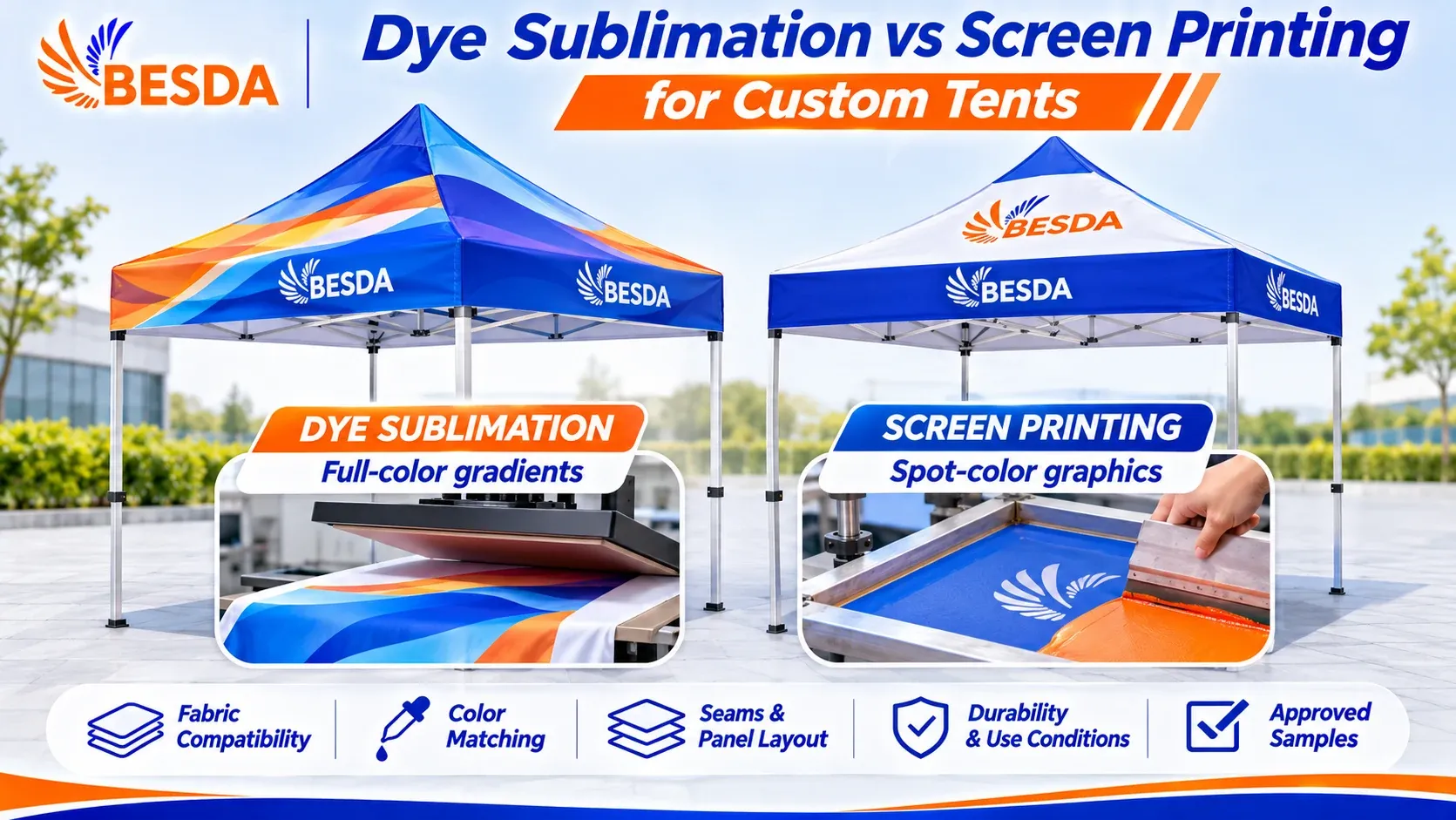
The printing method affects how a custom tent looks, feels and performs after repeated events. Dye sublimation is commonly selected for full-color polyester canopy graphics, while screen printing can suit simpler artwork and defined spot colors. Neither method should be judged by a marketing claim alone. Match the process to the fabric, artwork, order quantity and intended use.
What Is Dye Sublimation Printing?
In dye sublimation, printed transfer paper is placed against compatible polyester fabric and heat is applied. The dye moves into the fibers, producing a print integrated with the textile rather than a thick surface layer. The process is well suited to photographic images, gradients, multi-color branding and large panels. The result depends on fabric composition, ink, transfer settings, color management and finishing.
What Is Screen Printing?
Screen printing pushes ink through a mesh screen carrying a stencil. Each color generally requires a separate screen or setup, making the method practical for repeated designs with a limited number of colors. It can be suitable for simple logos, text and spot-color graphics. Ask how the ink is formulated for the fabric and whether curing and wash or rub tests are part of the process.
Color Range and Artwork Complexity
Dye sublimation can reproduce full-color images, gradients and complex artwork on compatible polyester. Screen printing is often efficient for simple designs with a small number of solid colors, although the final capability depends on equipment and ink system. If the design includes photographic backgrounds, color transitions or many brand colors, request a printed fabric strike-off or production sample. For a simple one- or two-color logo, compare setup cost and repeat quantity.
Fabric Compatibility Matters
Dye sublimation is commonly used with polyester textiles. It is not a universal process for every fabric or coating. Screen-print inks also need to be compatible with the fabric, surface treatment and intended use. Specify fabric composition and coating before approving the printing method. Ask the supplier to state the complete process for the actual canopy fabric, not just the printer technology.
Durability, Flexibility and Care
Because sublimation dye is integrated into compatible polyester fibers, the print does not form the same raised ink layer as many surface-print methods. Screen-printed graphics depend on ink formulation, curing and fabric movement. For either method, request relevant rub, wash, lightfastness or outdoor exposure evidence if these properties matter to the project. Do not accept a generic multi-year lifespan claim without test conditions.
Color Matching and Pantone References
Brand color accuracy requires a defined reference and approval process. A Pantone reference is useful for communication, but fabric, ink, transfer conditions and viewing light can affect the appearance of the finished print. Agree on the color reference, fabric, lighting conditions and acceptable tolerance before bulk production. Approve a physical strike-off when exact brand color is important.
Production Cost and Order Quantity
Screen printing may be cost-effective for simple artwork repeated in sufficient quantities because screens can be reused. Dye sublimation can avoid per-color screen setup and is attractive for complex full-color designs, but the total cost depends on fabric, print coverage and production workflow. Ask for a quotation using the same fabric, finished dimensions, print coverage and quantity. Compare setup charges, sample costs, repeat-order costs and production lead time.
Seams, Panel Layout and Full Coverage
A custom tent roof or wall is assembled from panels. The supplier must plan artwork around seams, hems, reinforcement, valances, vents and attachment points. A design that looks correct on a flat computer mockup may not align on the assembled tent. Request a panel-by-panel artwork template and a sewn sample or finished-unit photos. Confirm whether print coverage is one-sided, double-sided or visible through the fabric.
How to Choose the Right Method
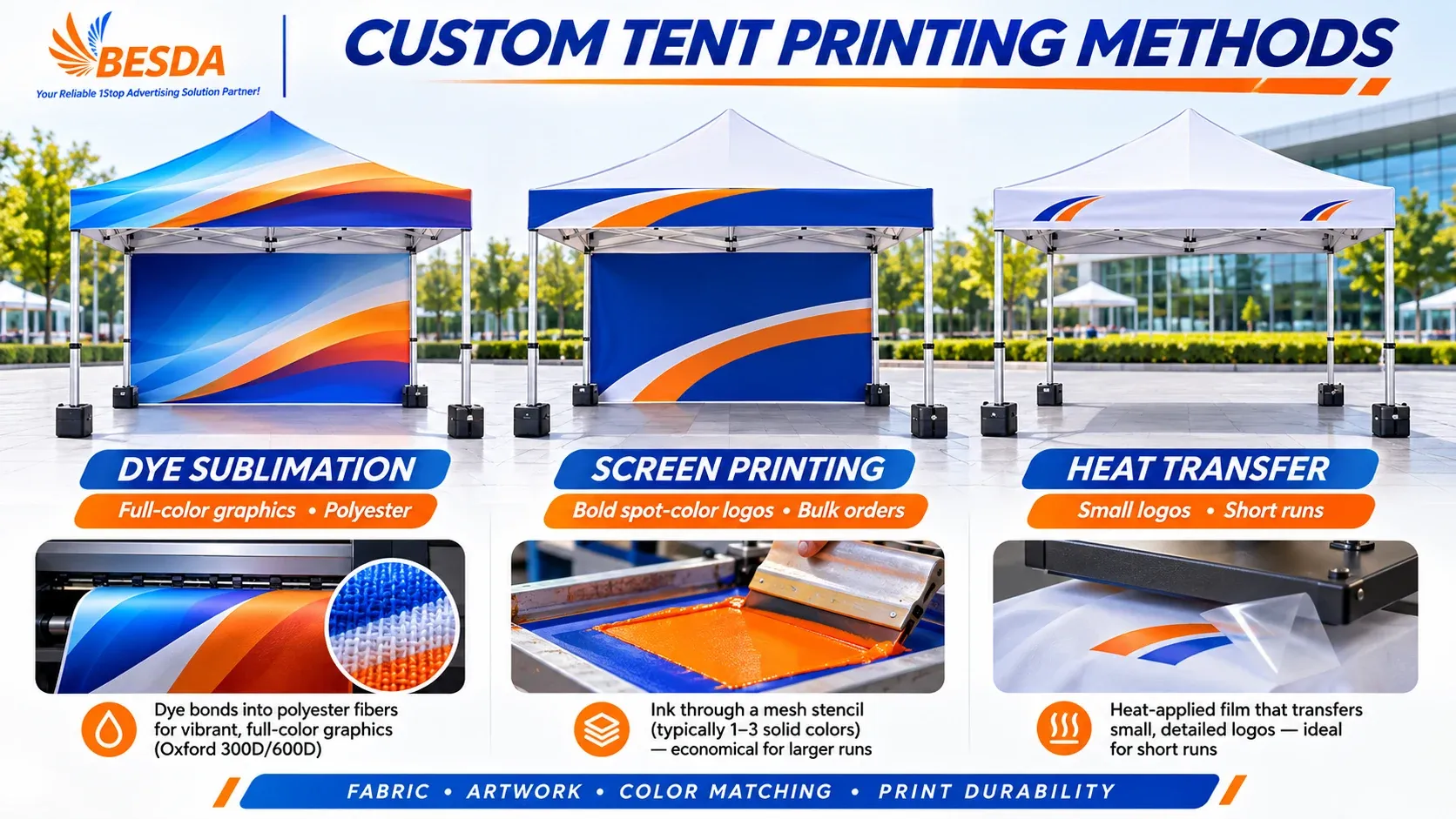
Choose dye sublimation when the fabric is compatible and the project needs full-color, photographic or gradient artwork across large areas. Consider screen printing for simpler spot-color designs when the supplier can demonstrate ink compatibility and suitable durability. Ask for a physical sample, production method statement, fabric specification and color approval procedure. Select based on evidence and the actual campaign—not the process name alone.
Comparison Table
Process — Dye sublimation: Heat-transfer dye into compatible fibers; Screen printing: Ink applied through mesh stencil.
Artwork — Dye sublimation: Strong fit for full-color / gradients; Screen printing: Strong fit for simpler spot-color artwork.
Setup — Dye sublimation: Transfer workflow and color management; Screen printing: Screens and setup per color.
Fabric — Dye sublimation: Commonly polyester; verify compatibility; Screen printing: Depends on ink and fabric system.
Surface feel — Dye sublimation: Typically no thick surface ink layer; Screen printing: May leave a perceptible ink layer.
Best fit — Dye sublimation: Complex branded canopy panels; Screen printing: Simple logos and repeat spot-color runs.
Frequently Asked Questions
Is dye sublimation better for custom tents?
It is often a strong choice for full-color polyester tent graphics, but the best method depends on fabric, artwork, quantity and required performance.
Can screen printing be used on tent fabric?
Yes, if the ink and curing process are compatible with the specified fabric and intended use.
Does dye sublimation guarantee exact Pantone colors?
No. Color depends on fabric, ink, transfer settings and viewing conditions. Approve a physical color sample.
Which method is cheaper?
It depends on artwork complexity, quantity, setup charges, fabric and coverage. Compare like-for-like quotations.
Will printed tent graphics fade outdoors?
All outdoor graphics can be affected by UV exposure and weather. Ask for test evidence and care guidance for the exact fabric and ink system.
Why Choose BESDA?
BESDA supports B2B projects across custom flags, event tents, portable trade show displays, counters and illuminated signage. We approach each enquiry by confirming the actual application, dimensions, materials, frame or hardware compatibility, artwork, packaging and destination requirements. Product specifications, test evidence and delivery details should be confirmed in the approved quotation and production documents. Send BESDA your artwork, tent fabric preference, print coverage, quantity and required brand colors. We can recommend a compatible printing workflow and arrange a physical color approval before bulk production.
Related BESDA resources
Deeper reading on this site: Quality Control, Outdoor Event Branding and Factory Tour.
Next step
Send us your application, sizes, quantity, artwork status and destination, and we will reply with a specification-led quotation and a confirmed production schedule.
You can reach us on WhatsApp or by email, or use the form on the contact page for a recommendation within one working day.