News & Insights
Dome Tent vs Pagoda Tent
Compare dome and pagoda event tents by roof shape, frame, usable headroom, weather planning, branding, setup and transport.
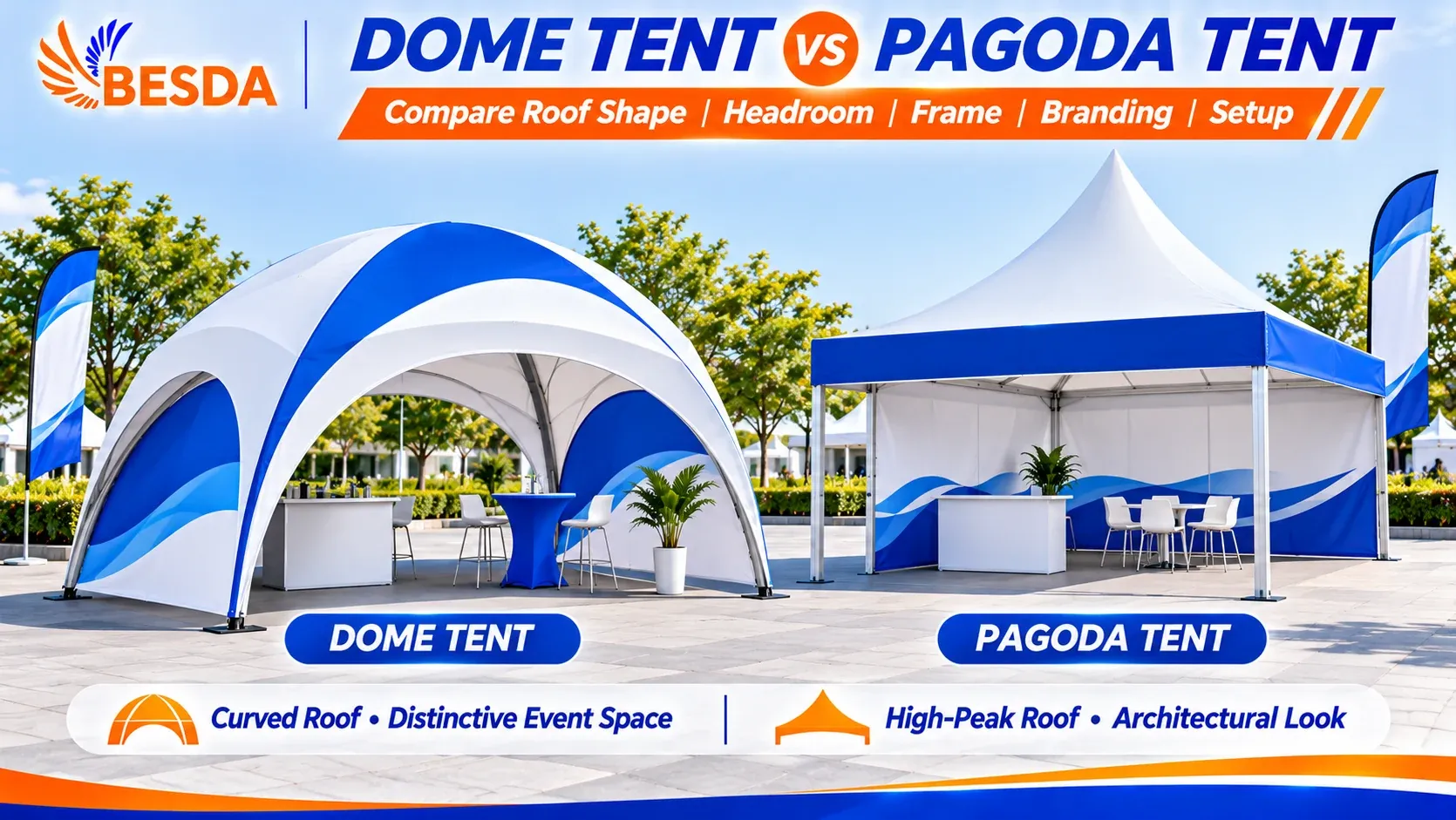
Dome tents and pagoda tents create very different visual impressions. A dome profile feels rounded and continuous; a pagoda roof has a distinctive high central peak. Both can be used for promotional events, hospitality, exhibitions and temporary shelters. The right choice depends on the site, the required internal space and how the structure will be transported and installed.
What Is a Dome Tent?
A dome tent has a curved roof profile supported by a frame or structural system designed to create an arched enclosure. Commercial event dome designs vary widely: some use a conventional pole or modular frame, while others use specialized components or inflatable supports. Confirm the exact construction, number of frame sections, entrance dimensions, clear floor area and whether the walls are integrated or removable.
What Is a Pagoda Tent?
A pagoda tent is recognized by its high central peak and sloping roof panels. The raised profile can create a formal, recognizable canopy for hospitality, retail promotions and event spaces. Pagoda describes the roof style, not necessarily the deployment mechanism. Some models use folding frames; others use modular structural systems.
Roof Shape and Visual Identity
A dome roof presents a rounded silhouette and can create a continuous curved surface for a distinctive event environment. A pagoda roof creates a central focal point and a more architectural high-peak appearance. Consider how the tent appears from approach routes, neighboring booths, aerial views and event photography. Check venue height restrictions and nearby structures.
Usable Headroom and Interior Layout
Do not compare only the highest point. Request peak height, eave height, entrance clearance, wall height and a floor plan showing usable space. A curved dome can have lower headroom near the perimeter; a pagoda roof can also slope down toward its edges. Place counters, seating, lighting and display equipment on the drawing before approving the size.
Frame and Material Specifications
Ask for frame material, tube or profile dimensions, joint design, roof fabric, wall fabric, connectors and corrosion protection where relevant. A product image does not establish the structural grade or weather rating. Request a parts list and technical drawing. If the tent is intended for repeated rental use, ask which frame and fabric components are replaceable.
Sidewalls, Doors and Ventilation
Check whether the design supports solid walls, windows, mesh, doors, half walls or removable panels. For enclosed events, ventilation and access routes should be considered alongside appearance. Ask how walls attach, whether the door position can be customized and whether the system supports rain gutters or connectors to adjacent tents.
Branding and Printing
Confirm which roof and wall panels can be printed, whether graphics are single-sided or double-sided and how artwork is divided by seams. Curved or sloped panels may need special templates to keep logos readable. Approve a panel layout and color proof. For large areas, check the position of logos from the main visitor approach.
Anchoring and Weather Planning
The anchor plan must match the specific tent, ground surface and exposure. Grass, soil, concrete and asphalt may require different approved fixing methods. Ask for the manufacturer's installation and operating limits. Do not infer wind resistance from the dome or pagoda shape. Follow model-specific instructions, event rules and qualified site advice.
Transport, Setup and Maintenance
Compare packed frame length, package count, gross weight, tools, crew requirements and setup sequence. Check whether roof fabric stays attached during folding or needs separate handling. For repeated use, dry the fabric before storage, inspect seams and connectors, and keep a labeled spare-parts list.
Which Tent Should You Choose?
Choose a dome profile when its curved shape, internal arrangement and specific frame design suit the event. Choose a pagoda profile when a high-peak visual identity and compatible installation system better match the brief. Compare dimensioned drawings, usable area, clearances, branding, anchoring, transport and total setup effort before selecting.
Comparison Table
Roof shape — Dome tent: Curved / arched; Pagoda tent: High central peak with sloping panels.
Visual impression — Dome tent: Rounded, continuous profile; Pagoda tent: Architectural high-peak profile.
Headroom — Dome tent: Varies across curved roof; Pagoda tent: Highest at central peak.
Frame — Dome tent: Model-specific frame or structural system; Pagoda tent: May be folding or modular.
Branding — Dome tent: Curved panel artwork may need templates; Pagoda tent: Sloping roof panels need layout planning.
Selection priority — Dome tent: Interior geometry and curve; Pagoda tent: Peak/eave heights and roof presentation.
Frequently Asked Questions
Is a dome tent stronger than a pagoda tent?
Neither roof shape guarantees strength. Compare the actual frame, materials, anchoring and approved operating conditions.
Which tent gives more headroom?
It depends on dimensions and roof geometry. Compare peak height, eave height and clear floor area.
Can both tents have custom printing?
Many models support printed roof or wall panels. Confirm the exact printable surfaces and artwork templates.
Can a pagoda tent be a pop-up tent?
Yes. Pagoda describes roof style, while pop-up describes a folding deployment mechanism.
Why Choose BESDA?
BESDA supports B2B projects across custom flags, event tents, portable trade show displays, counters and illuminated signage. We approach each enquiry by confirming the actual application, dimensions, materials, frame or hardware compatibility, artwork, packaging and destination requirements. Product specifications, test evidence and delivery details should be confirmed in the approved quotation and production documents. Send BESDA your event footprint, desired roof appearance, peak and eave clearance, sidewall requirements, ground surface and print plan. We can help compare suitable dome and pagoda models.
Related BESDA resources
Deeper reading on this site: Outdoor Event Branding, Factory Tour and Warehouse & Logistics.
Next step
Send us your application, sizes, quantity, artwork status and destination, and we will reply with a specification-led quotation and a confirmed production schedule.
You can reach us on WhatsApp or by email, or use the form on the contact page for a recommendation within one working day.