News & Insights
Outdoor Tent Weights & Anchors Guide
Choose tent weights, stakes, ground screws and anchor systems by surface, tent design, exposure and manufacturer instructions. Includes a buyer checklist.
A canopy tent can become a serious hazard if it is not secured correctly. Event users frequently ask whether sandbags, water weights, ground stakes or screws are best. The answer depends on the tent model, surface, exposure and event rules. This guide explains the options and gives buyers a checklist for planning a safe installation—not a substitute for the manufacturer's engineering instructions.
Why Tent Anchoring Matters
A canopy roof catches wind and transfers forces through the frame to its legs and anchors. If the anchoring system is inadequate, the structure can move, tip, lift or damage nearby property and people. Never assume a tent is safe because it feels heavy or because a similar model survived a previous event. Follow the exact manufacturer's anchoring instructions and the event site's requirements.
Ground Stakes and Soil Anchors
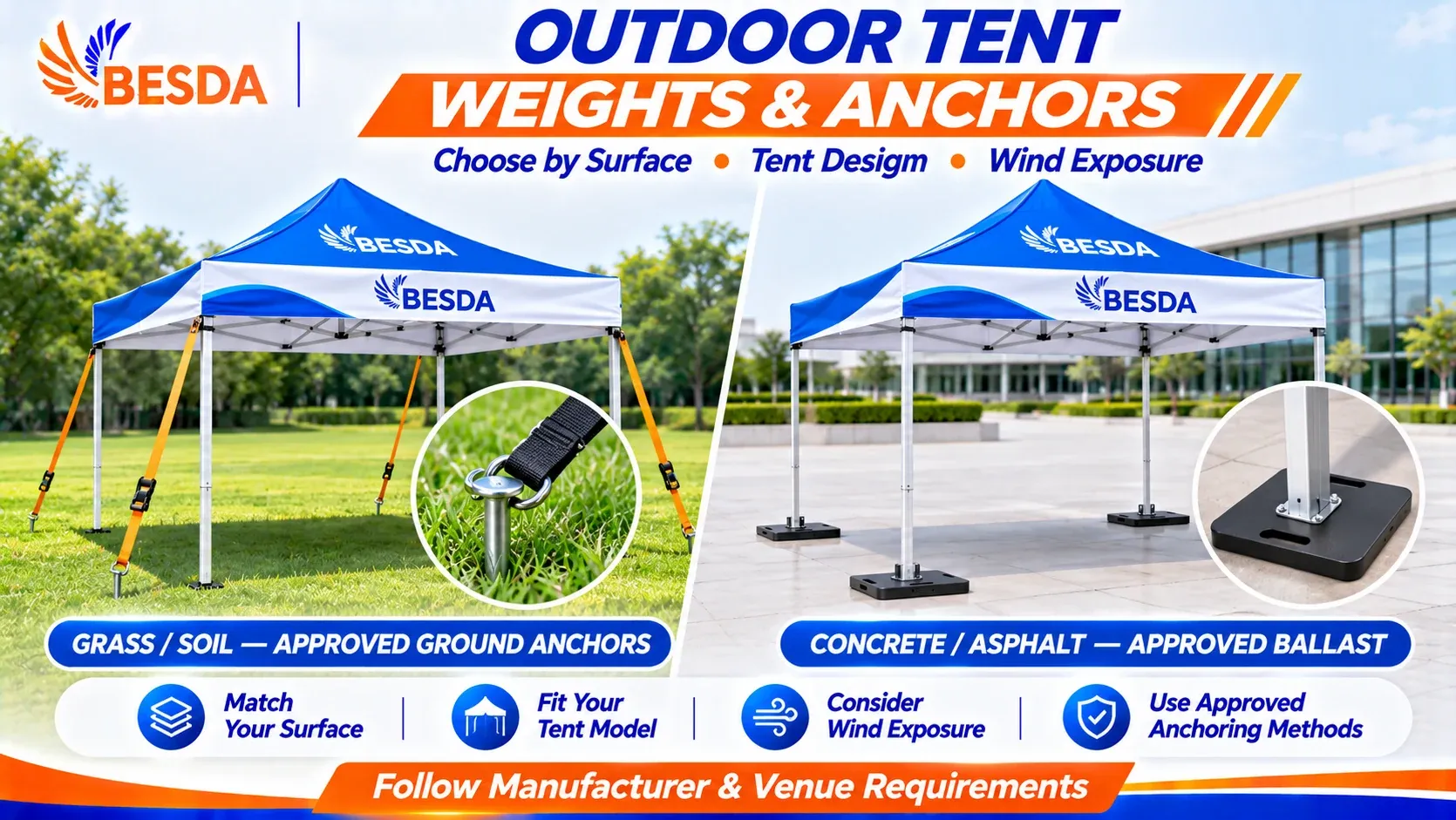
Approved stakes or ground anchors can be used where the soil type and site rules allow. Their holding capacity depends on anchor design, embedment, soil condition, installation angle and load direction. Before drilling or driving an anchor, confirm underground utilities, venue permission and the manufacturer's specified hardware. A short decorative tent peg is not automatically suitable for a commercial canopy.
Weights for Concrete and Asphalt
Hard surfaces may prevent ground staking. Compatible leg weights, ballast plates or other approved systems may be used, depending on the tent design and site conditions. Some events require a documented ballast plan or a specific weight at each leg. Ask the tent supplier for the approved ballast configuration and the event organizer for its rules. Do not improvise with loose objects, vehicle parts or unsecured containers.
Sandbags, Water Weights and Weight Plates
Sandbags and water-filled weights are convenient ballast options when designed for the canopy leg or base. Weight plates may provide a more compact solution. Their suitability depends on the required mass, attachment method, leg geometry and ground surface. Check the actual filled weight, attachment security, leakage risk, handle strength and whether the weight can shift. Empty water bags are not ballast; the filled mass must be verified.
Ground Screws and Vehicle Bases
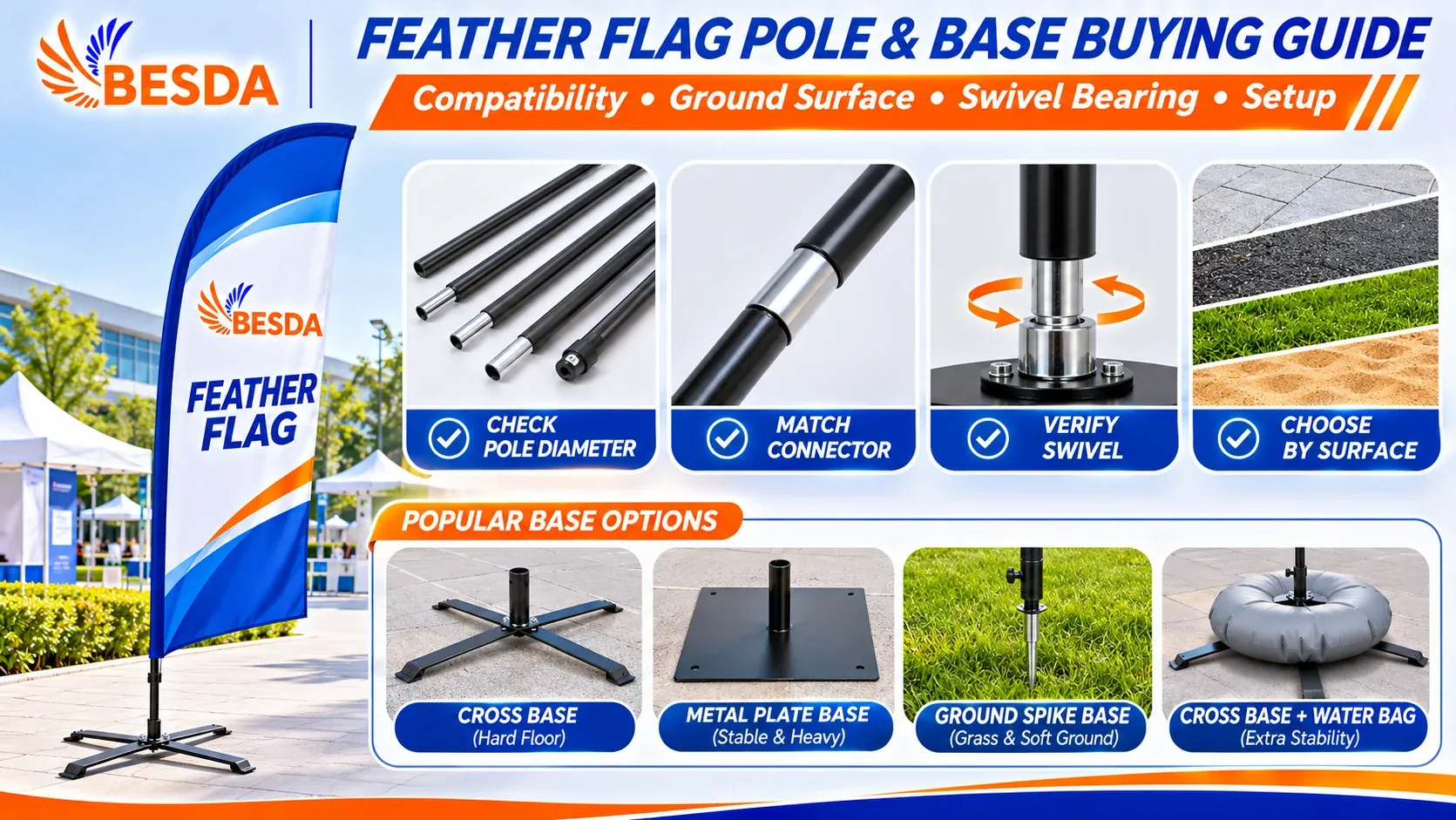
Ground screws may be suitable for compatible soil conditions and approved structures. Vehicle tire bases are a different system used for certain flag or signage products and should not be confused with canopy leg anchoring. Confirm the exact product application, load direction, installation procedure and compatibility. Do not assume an anchor marketed for a flag can secure a large tent.
Wind Exposure and Tent Geometry
Wind load changes with roof area, height, sidewalls, orientation, nearby buildings, open terrain and gust conditions. A larger tent generally presents a different load from a small one, but no simple size-only formula can determine safe ballast. Ask for model-specific operating limits and an anchoring plan. Lowering or removing sidewalls may change exposure but does not replace the required anchor system.
Event Rules, Fire Ratings and Site Approval
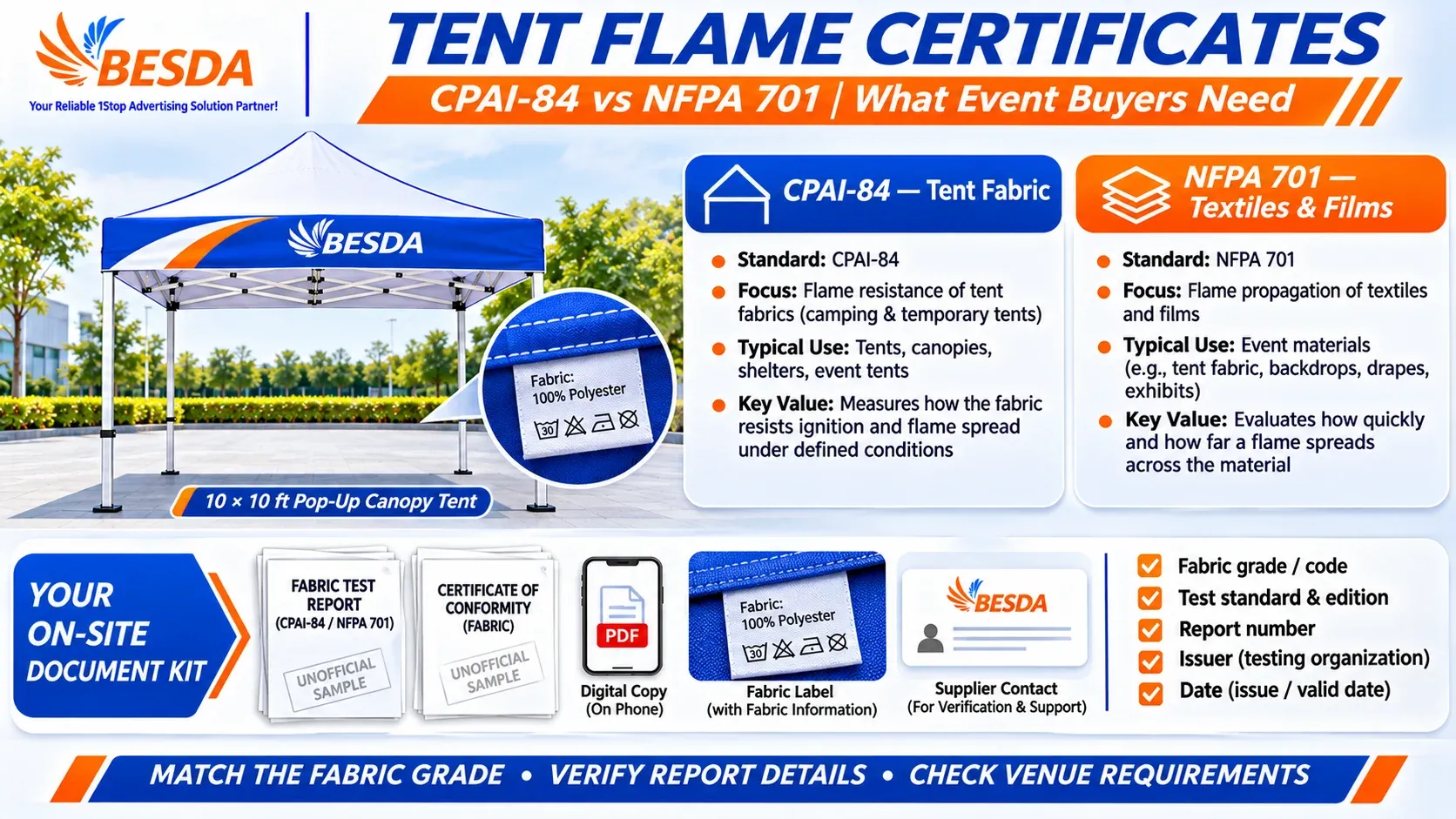
Trade shows, markets and festivals may specify tent dimensions, ballast per leg, fire certification, aisle clearance and prohibited fixing methods. Some sites do not permit ground penetration; others require approved stakes or engineered anchors. Get written venue approval before shipping or installing the tent. Submit product documentation and the anchoring plan when required.
Inspection Before and During Use
Inspect every leg, connector, anchor, strap and ballast attachment before opening the event. Recheck after movement, rain, ground softening or changes in wind. Keep the installation area clear of trip hazards. Stop use and follow the manufacturer's shutdown procedure when conditions exceed approved limits. Do not wait for the structure to begin moving.
How to Build an Anchoring RFQ
Provide tent model and footprint, peak height, sidewall configuration, surface type, exposure, venue rules, anchor points, approved hardware, required documentation and quantity. Request a drawing that shows the anchor position and attachment method.
Comparison Table
Grass / suitable soil — Possible solution to evaluate: Approved stakes or ground anchors; Must confirm: Soil, embedment, utilities and anchor rating.
Concrete / asphalt — Possible solution to evaluate: Approved ballast, plates or engineered fixing; Must confirm: Required ballast and attachment per leg.
Pavers / decking — Possible solution to evaluate: Venue-approved fixing or ballast; Must confirm: Surface damage and structural capacity.
Mixed surfaces — Possible solution to evaluate: A site-specific combination; Must confirm: Different approved method for each area.
High exposure / gusts — Possible solution to evaluate: Engineer / manufacturer approved plan; Must confirm: Operating limits and stop-use procedure.
Frequently Asked Questions
How much weight does each tent leg need?
There is no universal figure. Use the tent manufacturer's instructions and the event site's requirements for the exact model and conditions.
Are sandbags enough to secure a pop-up tent?
Only if the specified ballast amount, attachment and installation are approved for that tent and site. Sandbags are not universally sufficient.
Can I use ground stakes on concrete?
No. Ground stakes require penetrable ground. Use a site-approved ballast or engineered fixing method on hard surfaces.
Should I leave a canopy up in strong wind?
Follow the manufacturer's operating limits. Stop use and dismantle or secure the tent as instructed when conditions exceed those limits.
Can I use the same anchors for a flag and a tent?
Not automatically. Their geometry, loads and attachment systems differ. Confirm product-specific compatibility.
Why Choose BESDA?
BESDA supports B2B projects across custom flags, event tents, portable trade show displays, counters and illuminated signage. We approach each enquiry by confirming the actual application, dimensions, materials, frame or hardware compatibility, artwork, packaging and destination requirements. Product specifications, test evidence and delivery details should be confirmed in the approved quotation and production documents. Send BESDA the tent model, footprint, surface type, event location and venue anchoring rules. We can help identify which accessories and technical documents should be confirmed for your project.
Related BESDA resources
Deeper reading on this site: Outdoor Event Branding, Quality Control and FAQ.
Next step
Send us your application, sizes, quantity, artwork status and destination, and we will reply with a specification-led quotation and a confirmed production schedule.
You can reach us on WhatsApp or by email, or use the form on the contact page for a recommendation within one working day.